
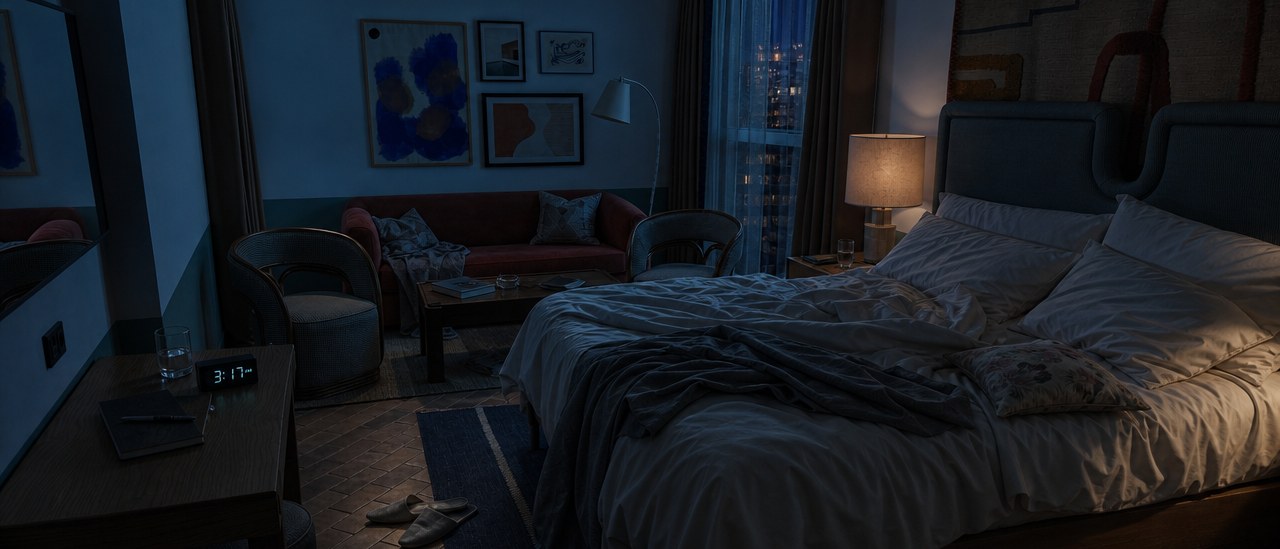
I am a world-class multitasker. On any given Tuesday, I can comfortably clear out my inbox while nodding thoughtfully on a Teams call that absolutely should have been an email. My brain is wired to juggle ten things at once.
The problem is, when I finally turn the lights out and my body is begging for sleep, my brain doesn’t get the memo. It doesn’t power down. It just takes all that multitasking energy and points it directly at my midnight to-do list.
Somewhere in the quiet, my mind opens a dozen unclosable browser tabs of pending tasks and productivity plans.
The confession
At 3am, my brain demands an audit of everything I do not have the tools to solve in bed. It usually looks like this:
- The Career Move: Should I go for that new position that just opened up? By day, it’s a simple pros-and-cons list. At 3am, it’s life or death. I take it and I thrive. I take it and I drown. I turn it down and watch a door close in slow motion forever.
- The Reviewers: Will my journal publication be accepted? What if Reviewer 3 absolutely destroys my methodology?
- The Maths: I worked on the money budget on Tuesday. It was fine. Now, in the dark, I am convinced the numbers have changed and I need to rerun the maths in my head immediately. I distinctly remember doing this before I moved house, counting the various pots for my deposit in my head!
- The Absurd: Did I inhale too much dust during that kitchen renovation three years ago? Is that why my 10K running time has plateaued? It is completely irrational, but right now, it is the most urgent medical crisis of our time, and I absolutely must pick up my phone to Google it.
That is why having the phone so close is a trap just dying to wake you up and engage your brain. Late-night scrolling is the worst thing you can do. It promises closure: a quick search about dust exposure, rereading an old conversation to make sure your tone was right, or the sudden excitement and temptation of checking to see if she has replied to my message yet. But the phone never solves the problem. It only feeds the multitasking machine.
The realization
Here is the realization that changed things for me. The night-time mind isn’t a problem solver. It is just a broken record playing your pending tasks on repeat.
People tell you to “empty your mind.” I’ve tried the apps with the lovely voice describing a gentle train ride through the Alps. It’s a lovely train. But the whole time it was talking, my actual life sat on the end of my bed, staring at me.
Telling a chronic multitasker to “empty their mind” when it’s full of things they love, fear, and might lose is like telling them to just be taller. It’s not unkind advice. It just isn’t listening to how our brains actually work.
What actually helps
Since I couldn’t magically switch my brain off, I had to learn how to manage it. Here is what actually works for my open tabs:
- The “Strain-to-Hear” Audiobook Trick: I try playing an audiobook on such a low volume that I have to physically strain to listen, which forces my brain to focus on just one thing. It works brilliantly, but it requires a Goldilocks level of content. If the book is too exciting, I just keep extending the sleep timer. If it’s too much of a slog, my mind wanders right back to the kitchen dust.
- The “Park It” Rule: Nothing good comes from a 2am relationship audit. Never start a debate in the dark, and try not to go to bed angry. If things get tense, I try to calmly say, “Let’s park this for now. We are great together, and everything will make a lot more sense in the morning.” It is incredibly hard to do in the moment, but it saves days of exhaustion, lets you sleep better and wake up with less guilt.
- The “Safe Space” Walk: When all else fails, I actively explore a world in my head. I visualize walking my dogs. I imagine her running through the grass whilst he tries to get her attention doing Crash Bandicoot’s signature spins. I picture myself walking after them in hyper-detail, observing the texture of the hedges, the depth of the forest, and the exact shade of the sky. It becomes a personal safe space that gives my busy mind a job to do.
Building a better world for the dark
In fact, that mental walking exercise was the original inspiration for Mythrae.
The number one reason users fail with wellness apps is compliance — they work, but you just stop using them. Either they are too clinical or too boring. I realized I didn’t need a sleepy voice telling me to relax; I wanted a living, organic world.
We designed Mythrae to sit right at the intersection of engaging and calming. It is a world that grows with you, with just enough gentle surprises around the corner to keep a multitasking brain interested, but never so much excitement that it keeps you awake. We wanted to use scientific methodology to help you rest, combined with just enough engagement to keep you coming back. The goal is to help you build a habit that actually works, so it doesn’t end up as just another unused subscription you feel guilty about. And the habit is what finally helps you switch off.
A final note
When the world shuts down for the night, the silence and lack of people can make big thoughts feel suffocating. If you are lying awake feeling lonely and empty, please know: it is the hour, not you. Things almost always look better and more manageable in the morning.
But some nights, especially when you are alone, are heavier than just a busy mind. If yours have more in them than tiredness, please don’t keep it for the dark. Talk to a doctor, or reach out to a trusted professional. If you need immediate support, we keep a list of free, confidential helplines you can reach at any hour, anywhere in the world. No app or product is an answer to that. When it comes to the heavy stuff, please trust the professional organizations that are built to help.
That’s the whole confession.
— Richard
Founder, Mythrae
A note on Good Company: this is writing from the house, not marketing. Nothing here is sponsored and no one is paid to appear. Mythrae is a wellness house, not therapy or medical advice.